mama scout lab e-course

Showing posts with label science. Show all posts

Tuesday, July 21, 2015

{travel} a morning in Dahlonega, Georgia


Today we headed to one of my favorite small, southern, historic towns. Dahlonega , Ga is about an hour north of Atlanta. It was the site of a big gold rush that preceded the more famous ones in California and Alaska. There was even a mint here for a short time. It is also near Amicalola Falls and the head of the Appalachian Trail. The drive in was beautiful with windy roads, lush forests, rolling hills and distant mountains. 


We stopped in town to see a rare river diving bell that was used in gold mining. It was fascinating and made us think about diving bells we have read about when studying Da Vinci and the construction of the Brooklyn Bridge. 

We then continued on to a surprisingly good tour at Consolidated Mines. For $16 for adults and $11 for kids, we were able to pan for gold and go 200 feet into the biggest mine east of the Mississippi. Our tour was so interesting. We learned about the short history of this particular mine and the usually high purity and beauty of Georgia gold. But the most compelling information was about the constant danger that miners faced for wages of about $1 a day. The uninsulated electricity, deafening noise of round the clock drilling and explosives, and toxic exposure to chemicals and dust made me wonder how anyone could do this job. If you did not die from an accident, your health would certainly suffer tremendously. I already had a sense of this with coal miners and had never really thought about gold mining. 


We also learned about the devastating effect that mining has on the earth. Early on, gold nuggets were found laying in the river beds and in the forest. As the mountain eroded over millions of years, the heavy gold worked its way down the mountain. Eventually, the all obvious gold was found and the mining companies decided they could just erode the mountain themselves! They would mimic a process that nature took eons to complete and with a huge hydraulic hose wore down mountains on their own. It was ruinous (and is heavily regulated or banned now).


Later in the day we stopped in the center of town at the Dahlonega Gold Museum which is housed in the oldest courthouse in Georgia. The museum had a few rooms of artifacts related to the gold mining history of the town. To be honest it was a little under impressive until we watched  the 17 minute documentary included the admission. It was well done and included oral histories from old miners who remembered when the mines were a central part of the town's economy.


The downtown of Dahlonega is filled with gift shops, antique stores, outfitters, and cafes. We had a nice lunch at the Crimson Moon Cafe. I ordered an angus burger with a fried green tomato on top and it filled me up for the rest of the day. If I was in town longer I would definitely check out some of the live performances at the Crimson Moon as their programing schedule is impressive. 


If you are in Atlanta or just looking for a southern getaway, I highly recommend Dahlonega. It is quaint, historic, arty and walkable.

Have you spent time in Dahlonega? What was your favorite aspect?

Wednesday, January 15, 2014

{how to} dip net


What you need :

~ nets (we have a selection that we have picked up at garage sales, pet stores and chain stores).
~ tubs (maybe some dishpans from the dollar store or other wide tubs)
~ camera
~ field guide (search online for printouts of the invertebrates in your area)
~ journal

Dip netting is such a great way to see what is living in the bodies of water around you. I am always surprised at what shows up in the net. From leaches to huge blue crabs there is so much more to the world that what we easily see. It is a little like magic, if you ask me.

We have dip netted in retention ponds, lakes, swamps and the ocean. It is one of our favorite things to do and something I hope to do much more of this year.

Here are some tips and guidelines, but I think you will see it is easy and intriguing once you get started. 

(Obviously, be safe - whatever that means to the particular body of water you are exploring). 

Start by fill in a tub or two with the water from the source you will be dip netting from.

Use your nets to gently scoop from the bottom of the water.

Take your net to one of the tubs and empty your scoop. Look around, be careful and see what it in there. We have separated out the animals into a separate tub to observe them while dip netting.

The best place to find creatures is at the edges, near vegetation and grasses and I would assume near rocks although we have very few of those in Florida.

Always treat the creature with gentle hands and return them to their home shortly after logging and observing them. It is essential that kids are taught to treat these specimens with respect. Do not remove them from their natural habitat.

A list or chart of the diversity you find turns this into a handy little science project, but really the exposure to these underground worlds is illuminating and inspiring to the dip netter.

Have you dip netted?

What is the most interesting thing you have brought up?

Tuesday, July 2, 2013

in which we pickled a shark


One of the only things I really missed about Florida while in France was beach evenings. Right now, the water in the gulf is hotter than a bathtub. The gentle, sloppy waves combined with the company of dolphins and sting rays makes it other worldly. We all float around in the soup until the last possible moment.

Then we beach comb. On this sojourn, we found a baby shark that had recently died (it had a small puncture wound on its head - maybe a bird?). It was too perfect a specimen to leave, so we did what we do. A little iPhone research and call for help on social media helped us decided that we would try to preserve the shark in isopropyl alcohol. (We need to have formalin on hand in the future!).

At 10 pm we pulled back into our center-of-the-state town and I flip flopped my sandy self into a Walgreens, loaded up my cart with alcohol and then asked the pharmacist for a syringe. "Any size will do," I casually said. "As long as I can use it to inject."


When we got home, we emptied and cleaned out our gallon popcorn jar and filled it up. We looked at the shark some more and then each kid took turns giving it shots. We were fascinated and saddened at the same time. But we thanked the shark for his life and hope he will live in our cabinet of curiosities for a long time. 


And of course this sparked all sorts of conversations. Most interesting was the Jersey Shore shark attacks of 1916; what an amazing story!


Thursday, February 7, 2013

{exploration lab} dissect an old mattress


On my kids' list of experiences to have, dissecting a mattress was high up there. In particular, my son wanted to make spring loaded shoes and he knew he could get those from a mattress. But finding an old bed in the alley did not seem like a good idea to me.

Luckily, when my brother moved, he left us his mattress which was in good shape but headed for the dump. The kids first drug it in and out of the garage for a month and used it to alternately jump and lounge on. After spending one afternoon laying in the yard on a mattress, I can attest to the decadence of this proposition.

Finally, the day came they were ready to literally tear in to their project.

It was amazing (as all these kid led projects are).

They worked together, divided up the tasks, took turns and split the raw materials when they were done. My daughter constructed a little bean bag sofa for her club house, one son had plans for a knight costume and the other son, well, he just could not cut up the spring grid. He was fascinated by the construction and pattern and thought it would be a shame to destroy it. I agreed and we propped it up in the garden and might grown vines on it or use it as a nature display area.

Or in a few months, he might be bouncing down the street in his new spring loaded shoes.


Friday, November 16, 2012

{geography lab} salt dough land forms


Are you good at geography? I never understood geography until I was an adult. I think for many kids, geography is too abstract and seems meaningless.

I discovered that I learn places on a map from experience, either traveling or through really amazing stories. The notion of memorizing capitals and countries without a tether to something real is about as alluring to me as cleaning the bathroom. Learning metro and train systems, driving through states, or pouring over maps of the places I read about is how I have come to understand the world and its physicality. 

To that end, my kids recently did a project that would be amazing for anyone learning about a specific place. We made salt dough maps of our state. You can see examples of this project all over Pinterest, so I guess it is a classic that was just under the radar for me. It is so simple. 

1. Make salt dough (recipe at bottom)
2. Print out or draw a map of your geographical area
3. We put our map in a plastic page protector. This meant that we could not cook it in the oven, but had to let it air dry. 
4. Put a ball of dough on the map and shape. We used toothpicks to pull the dough into the perfect coastline. 
5. Add specific features (mountains, prominent water features, bays etc.)
6. Let dry. (During this time, we pulled out the map and watercolored the ocean)
7. Paint landform.

You can make these and store them in pizza boxes if you want.


The physical connection to the the land form makes understanding our state so much easier. My kids completely get that there is a high ridge that runs down Florida. (And how that affected the early animals who lived here and why we can find shark teeth in the middle of the state). 

Have you done this with your kids?

What would be the defining feature for your state?


Make salt dough

Ingredients
1 cup salt
2 cups all purpose flour
1 cup warm water

mix and knead for 5 minutes.

air dry or bake at 200 (the time depends on the thickness, so check every 20 minutes)

we paint ours with acrylic craft paint and then seal with a spray varnish


Wednesday, September 19, 2012

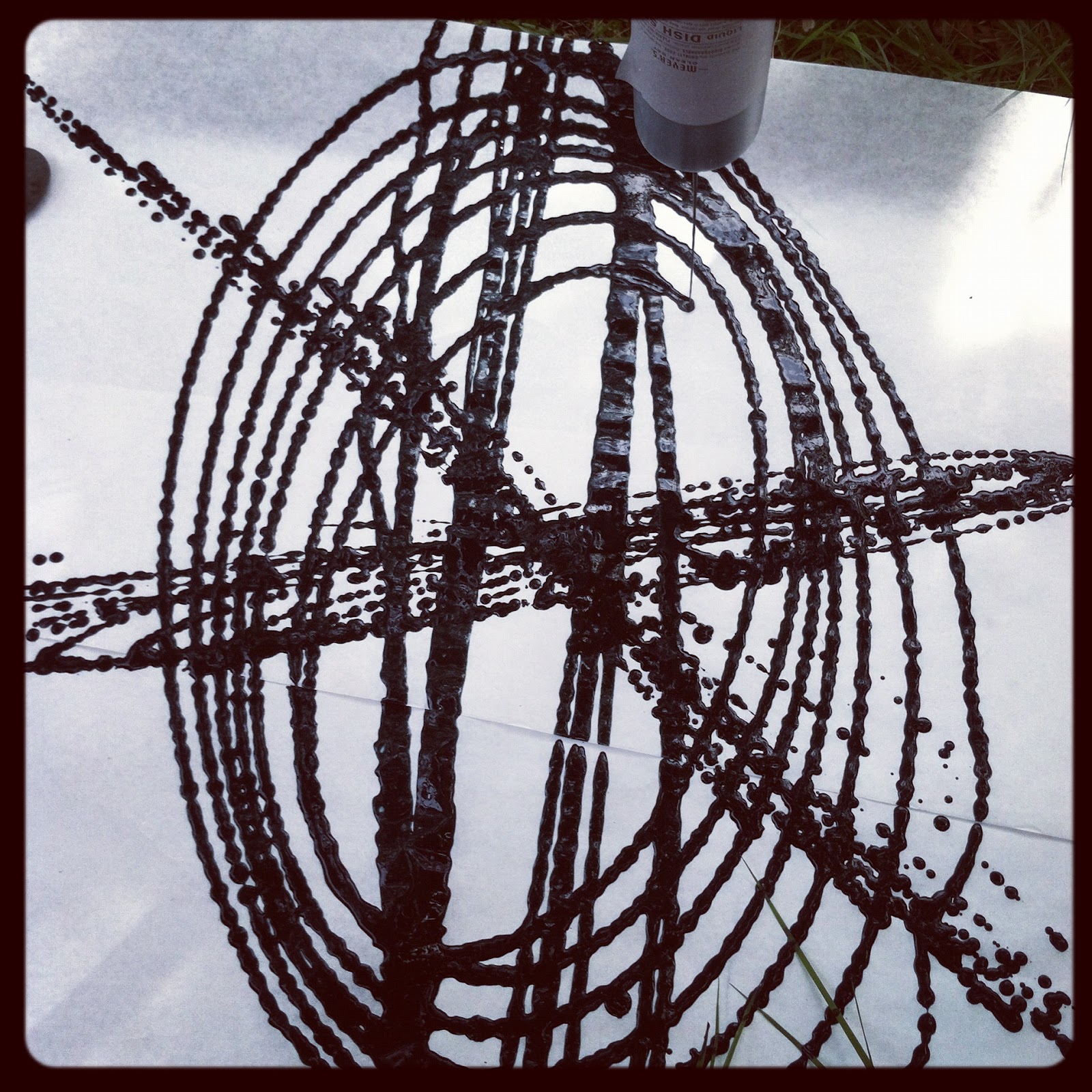
exploration lab :: pendulum art


Pendulum painting has been on my list to do for such a long time. I am so glad that we finally did it - it was fun for everyone.

What you need:
empty plastic bottle with small spout
yarn or string
watered down tempera paint
butcher paper


Cut off the end of the bottle, poke four holes evenly around, and tie yarn on. Leave a good amount of yarn because you might want to hang the pendulum up somewhere high.


Where to hang? We are incredibly lucky to have a full sized geodesic dome that works great for projects like this, but a tree limb, ladder, or even chairs with a broom stick will work. 


Fill with paint and swing. 

This is where all the experimenting comes in. 

Thickness of paint, method of swing and height of bottle, all change the outcome. 

Plan to play, get messy and try different ideas. 


The Mama Scout e-Lab is registering right now! If you would like a month full of creative writing prompts, family challenges, inspirational essays and links to cool resources, click here to read more. 

Friday, September 7, 2012

math lab :: dividing planes

I might have mentioned before, but I love Brown Paper School books. I grew up with a few. The illustrations and casual tone has always resonated with me. I recently picked up a copy of The I Hate Mathematics Book and immediately fell in love with the open ended math explorations it offered.

We spent one fun morning cutting up the sidewalk (dividing planes). We each took a square or rectangle of pavement and then cut it up using only 3 lines (edge to edge). 

The goal of the project was to see who could get the most segments. 

On the first attempt, everyone divided their sidewalk section in equal parts like a pizza. As we added more lines, eventually  getting up to 5, more original division starting happening.

Next, we introduced a curved line. (Not a spiral like you see above, that was later). So, we would use 4 straight lines and one curved (and many variations). Each kid would work on their square and then we looked at each person's work, counting and commenting  on their techniques. 


We eventually ran out of sidewalk and went inside to work on paper. We would decide on the specifics of each exploration, then work independently for a few minutes, and then share what we did. 

The kids really liked this (one in particular was very good at it) and as we went on, the designs became more complex and sophisticated. They started realizing which patterns gave the most segments and then would grab another sheet to work more with what they had just learned to see if they could go further. 


We learned the terms: plane, intersection, parallel, line, and line segment. 

We had a brief discussion about odd and even numbers and whether we could predict which we would get after dividing our plane (we couldn't - it could either way).

We discovered that a curved line will help you get more segments.

We also discovered that an off center line will help you get more segments. 

We talked about the applications for the skill (architecture, art and design, game making).

We had fun and thought we would do this again for entertainment.


What are your favorite resources for open ended math explorations? 

Wednesday, September 5, 2012

make :: contour plant drawings


I recently viewed the Ellsworth Kelly exhibition at the Metropolitan Museum of Art and was transfixed by his minimalist, contour drawings plants. The galleries that contained these simple images were calm and reverent spaces.


As soon as I returned home, I knew I wanted to do something similar with my children. So, we gathered greenery from our yard, trying to get the biggest variety we could, and set up a table with good drawing paper, art pencils and plant cuttings in old Perrier bottles.


I was amazed at how much my kids took to this project. I was worried it would fall flat because it was not messy enough or more hands on. We tried to focus primarily on the edges, not adding detail (although sometimes we could not stop ourselves). 


The end result, collected together is striking. I hung the drawings in my office, where I look at them everyday. They bring me the same calm I had in the gallery a few thousand miles away.


Thursday, August 23, 2012

book review :: The Sound of a Wild Snail Eating


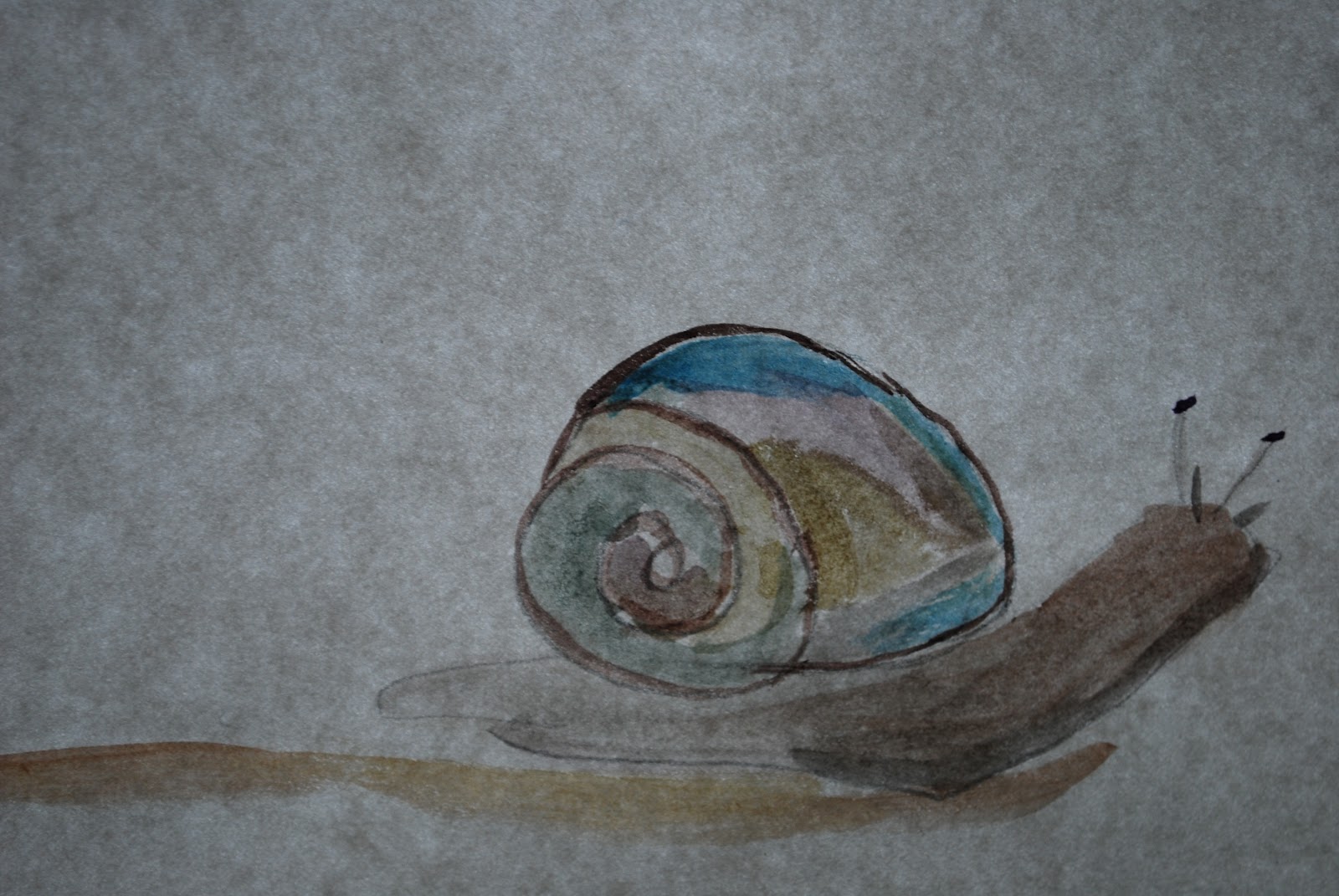
The memoir The Sound of a Wild Snail Eating should be read slowly and savored in little bits. As a young woman recovering from a chronic illness, Elisabeth Tova Bailey was gifted a little plant with a snail picked from the wild. At first, she grumbles at this perceived responsibility as she is so sick she can not even take care of herself. Slowly, she becomes fascinated by the snail and its habits and is able to find deep connections between her struggle to regain health and the impressive abilities of the snail to regenerate and sustain itself in an often harsh world. 

What made this particularly sweet to me, was that each day my naturalist son would ask me what I had read the night before. Much of the information I would share he already knew, but there were many new facts we learned along the way.

The first night Bailey spends with the snail at her bedside, she is stunned by the remarkable sound of the snail eating. It sounds like a little man eating celery, she writes. When I told this to my son, he was fascinated. We have raised snails several times, but have always kept them enclosed in glass, so never heard them. 

"That would be pretty amazing to hear, huh?" I remarked. 

A few days later, my son came up to me and whispered loudly, "Mom! Come here!"

"What?" I said.

"Come HERE!" he whispered louder with wide eyes.

I followed him as he led me to our snail habitat where he had fed the snails and left the lid off.

"Listen," he said, lowering his head.

I lowered and tilted my head and heard it! I heard the snail eating!

Our eyes met and I nearly cried at the magical gift he had just given me. 

We are often moved by big, natural phenomenon like huge crashing waves and lightening strikes that light up the whole sky, but in that moment I was just as mesmerized listening to the sublime activity of  this little snail munching on vegetables. 


Tuesday, August 7, 2012

make a mushroom spore print


With all the the rain we have had recently in Florida, I knew we would be able to find a lot of mushrooms. Our yard can be filled with them within just a few days. I had been intrigued with spore prints for a long time, and after seeing how very simple this was - I think it will be something we do over and over.


What you need:


mushrooms from your yard
paper
bowl


simply cut the stem down so you can set the mushroom gill side down, cover with a big glass bowl, and wait. Ours dropped their spore by the next morning (under 24 hours).


Then - apply open ended learning to it.


The design is beautiful. 


Draw it. 
Paint it. 
Photograph it.


Look at the spores underneath the microscope.


Look up what else has spores.

Monday, June 25, 2012

just watching the yeast fart


One of my kids is fascinated by yeast. (He is also has a deep love of entomology and herpetology). He frequently takes yeast and jars and sets up his own experiments. I have tried to interest him in becoming a master bread baker, thinking we would all benefit form his knowledge and product - but he was not interested. 


This is one of the types of things you can not anticipate a child being interested in. I mean, who would think? But here we are, watching the yeast wake up, bubble and then eventually die. He has wondered if you could get the yeast to eat things other than sugar, which led to a discussion of the oil noshing bacteria used in oil spills. When we wondered how we could catch wild yeast, an answer came while reading The Long Winter and we soon understood why Ma kept her starter underneath the stove. 


We had discussions of bread making courses I took in France and how different bakers have different methods for developing flavor (some that deal with yeast). We also talked about and tasted all sorts of fermented foods and thought about why they might be healthy for us.


And on and on....


In interest-led learning, or unschooling, or organic learning or whatever you want to call it - this is how it goes. An interest in something seemingly common and inconsequential opens the door (and sometimes the floodgates) to so much more. Connections and relationships between things, events, and ideas begin to weave webs of understanding that are deep and real and as individual as the learner. The universe has a way of offering up the most perfect education for the truly curious. And the beauty of all this is that it does not matter what the "entry subject" is. You can learn about the world by studying anything - calligraphy, zoos, perfume, comics and even just yeast. 


What is something you have studied that led you to unexpected places?


We have done another really great yeast experiment here.


full disclosure - if you buy one of these books, i get, like a nickel.

Friday, June 8, 2012

the snails are back


We raised snails last year and really loved it. This week, it has been overcast and raining - so we thought we might find some snails to watch again this year. We headed out to "snail alley" and they were there! Happily drinking up the water from the showers. So, we are setting up the habitat again. These are meditative and fascinating to watch. Here is my post from last year that shows how we did it. 

Thursday, May 31, 2012

buy your kids a blender!


If you have a making, hacking, exploring type of kid, you might want to consider getting them a blender


My son asked for his own after we attended a paper making co op. 


So, we scrounged one up and he went to town making lots and lots of homemade paper. (we actually scrounged up two and took one apart to look at the motor).


And then the projects kept coming.


With a blender my kids have ground up nearly every type of leaf and flower in the yard making potions that went right back in to the yard. 


My son also made monster repellant with lots of garlic. 


And many, many batches of fruit sorbets have been whipped up for treats.  


Of course, you need to feel confident that your children can use a blender safely before you set them loose, or you can supervise them when they feel the need to blend. 


It is one of the most open ended toys for older kids I have experienced


Would you let your kids have a blender? Or do you think I am nutty? (it's ok - I am used to it).


Wednesday, May 30, 2012

exploration lab :: make some potions


I had not intended to post this project, but it was such a hit I had to share. A a group of homeschool friends got together for a Harry Potter themed party at the park. I will admit, I was overwhelmed looking at party ideas on Pinterest. They seemed so intense and parent driven.  So, remembering that kids actually have the most fun and create the most interesting projects when adults support instead of direct the play - we simplified the party. 


There was a wand making station, spell books, some fun food, and the best of all - a potion table. 


For the potion table each family brought ingredients to fill the table. The kids used empty jars, droppers and spoons and sticks to stir. There was not a lesson to be taught, the kids simply made their own potions in a glorious, messy afternoon. All the items came from our kitchens (and one great family who brought a few blocks of dry ice to kick it all up a notch).


We had: 
splinters - stick tea
snot - laundry starch
ground up unicorn bones - baking soda
unicorn blood - silver glitter
mermaid tears - blue vinegar
spider hairs - pencil shavings from the pencil sharpener
dragon skin - sheets of sea weed
slug blood - cherry juice
micro creatures - yeast
bat claws - colored rice
mermaid hair - colored pasta
stardust - salt
vampire bile - red water
live slime - gak that we had made earlier in the week
giant's mustache hairs - long seaweed


and more! you get the idea... find stuff in your kitchen, put it in a jar and come up with a fun (or gross) name. We had a ton of fun doing this together the night before. 


I could tell you some of the cool concoctions and reactions we made...but I think you should play and test and hypothesize and discover them yourself. 


(one tiny hint : bubble solution and dry ice)


Tuesday, May 15, 2012

exploration lab :: mirrors and kaleidoscopes


This exploration lab is so simple, but surprisingly engaging and fun for kids (and adults). 


By taping two mirrors (unbreakable ones are the best for this)  together in the back, you can make a little kaleidoscope. We spent a good long time making patterns from paint stains on the art table, magazine and art book images and natural items. 


The closer you move the mirrors, the more reflections you can see and the more dynamic the pattern. By watching the mirrors while slowly opening and closing them, you can watch a beautiful morphing of color and shape. 


This is one of those little experiments that as soon as kids see what is happening they start exclaiming, "Wow! Awesome! Look at this!"


This is a good one to leave out (maybe on your nature table or window ledge) for each kid to revisit on their own to try new combinations or experiments. 


My kids especially liked making "creepy" creatures from the faces in a book of portraiture we had laying around!


Friday, March 9, 2012

edison and ford winter estate

The Edison and Ford Winter Estates in Fort Myers, Florida make a wonderful day trip if you happen to find yourself in central Florida. 

When you visit, do so in spring when every flower in the gardens is in bloom and the wind off the water makes the palm trees rustle and lull you back you back in time. The site is wonderful because it offers something for everyone. There is a museum with many of Edison's inventions, a beautifully manicured botanical research garden, two awesome turn of the century homes with furnishings, and the lab. Oh, the lab is the best! It is exactly as it was when Edison died. With jars and bottles and test tubes... amazing!

We are so interested in Edison and Ford right now, having done many experiments with our homechool co-op, including this one, reading biographies and watching documentaries. It is amazing the changes that these two inventors brought to the last century. And I think we are in a similar, quickly changing moment of history right now.  

I have never posted this many pictures in a post before. I hope it works for you!

Have you been here before? Did you love it too?


LinkWithin

Related Posts Plugin for WordPress, Blogger...